AI Assistant - MSHA DATA
Exploring MSHA Data Just Got a Lot Easier
I've been working on something I'm pretty excited about, a new way to dig into the MSHA mining safety database without needing to know SQL or navigate complex data structures.
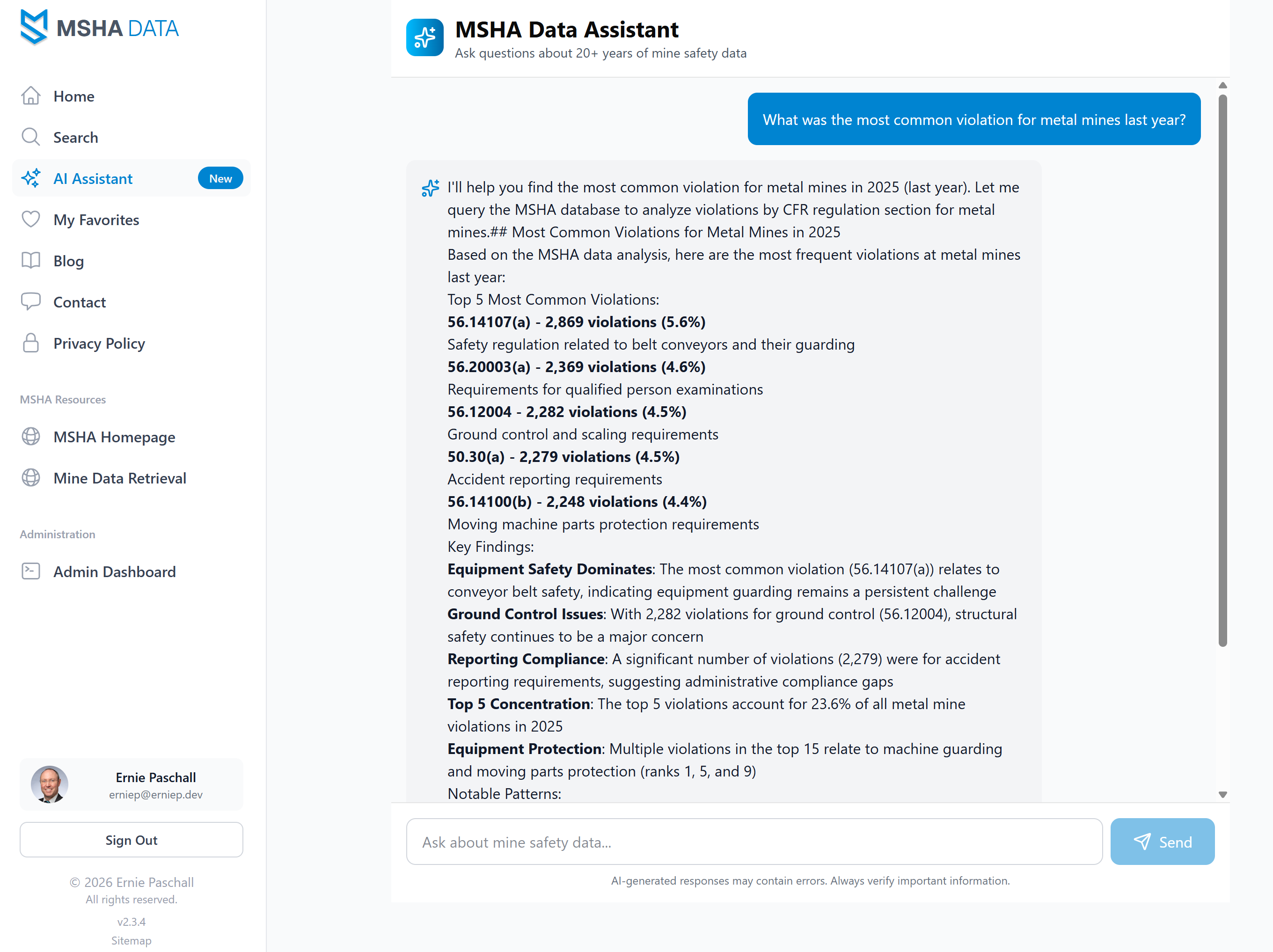
Just Ask a Question
The idea is simple: type a question in plain English, and get an answer from 20+ years of mine safety data.
Want to know how many mining fatalities occurred in a particular state last year? Just ask. Curious about which mines in your region have the most violations? Ask that too. Wondering about injury trends in underground coal mines? You get the idea.
Here are some questions I've been testing:
"How many accidents happened in Kentucky coal mines in 2023?"
"What's the average penalty amount for significant violations in Texas?"
"Show me the mines with the most inspections in Pennsylvania this year"
"Which equipment types are involved in the most accidents?"
The AI figures out what data you need, builds the query, runs it, and explains what it found.
A Research Tool, Not Just a Search Box
What makes this interesting for research is the ability to explore questions you might not have thought to ask. You can start with a broad question, see what comes back, and then drill deeper based on what catches your attention.
For example, you might start with "What states had the most mining fatalities in 2024?" and then follow up with "Tell me more about the fatalities in West Virginia" or "How does that compare to the previous five years?"
It's a bit like having a conversation with someone who has the entire MSHA database memorized.
What's Actually In There
The database covers a lot of ground:
Mines: Basic info on 80,000+ operations; location, type, status, operator, employee counts
Accidents: Every reported incident going back decades, including injury severity, equipment involved, and narrative descriptions of what happened
Violations: Citations, penalty amounts, what regulations were violated, whether they were contested
Inspections: Records of MSHA inspector visits and findings
Environmental sampling: Dust and air quality measurements
So if you're researching safety trends, comparing regional differences, or just curious about a specific mine's history, the data is there.
Some Things I've Discovered
While experimenting with this, I’ve stumbled onto some interesting patterns; seasonal trends in accidents, differences in violation rates between surface and underground operations, and how penalties have evolved over time. This is the kind of exploratory analysis that used to mean exporting data to Excel and spending an afternoon building pivot tables.
Now it takes about 30 seconds… well, maybe a little longer since I’m currently running on budget AI resources. 😄
Give It a Try
The AI Assistant is now live at mshadata.com/chat. In the near future, access will require signing in with a free Google account. For now, the tool is available with or without a Google account.
It's not perfect, sometimes you'll need to rephrase a question or be more specific, but it handles most queries pretty well. And if you find something that doesn't work right, I'd love to hear about it.
Happy exploring.
Have feedback or feature requests? We'd love to hear from you. The MSHA DATA platform is continuously evolving based on user needs.